Omega. Omega. Omega. Omega. Omega. Omega
Olympic 1932 Chrono Chime. Olympic 1932 Chrono Chime. Olympic 1932 Chrono Chime. Olympic 1932 Chrono Chime. Olympic 1932 Chrono Chime
Olympic 1932 Chrono Chime
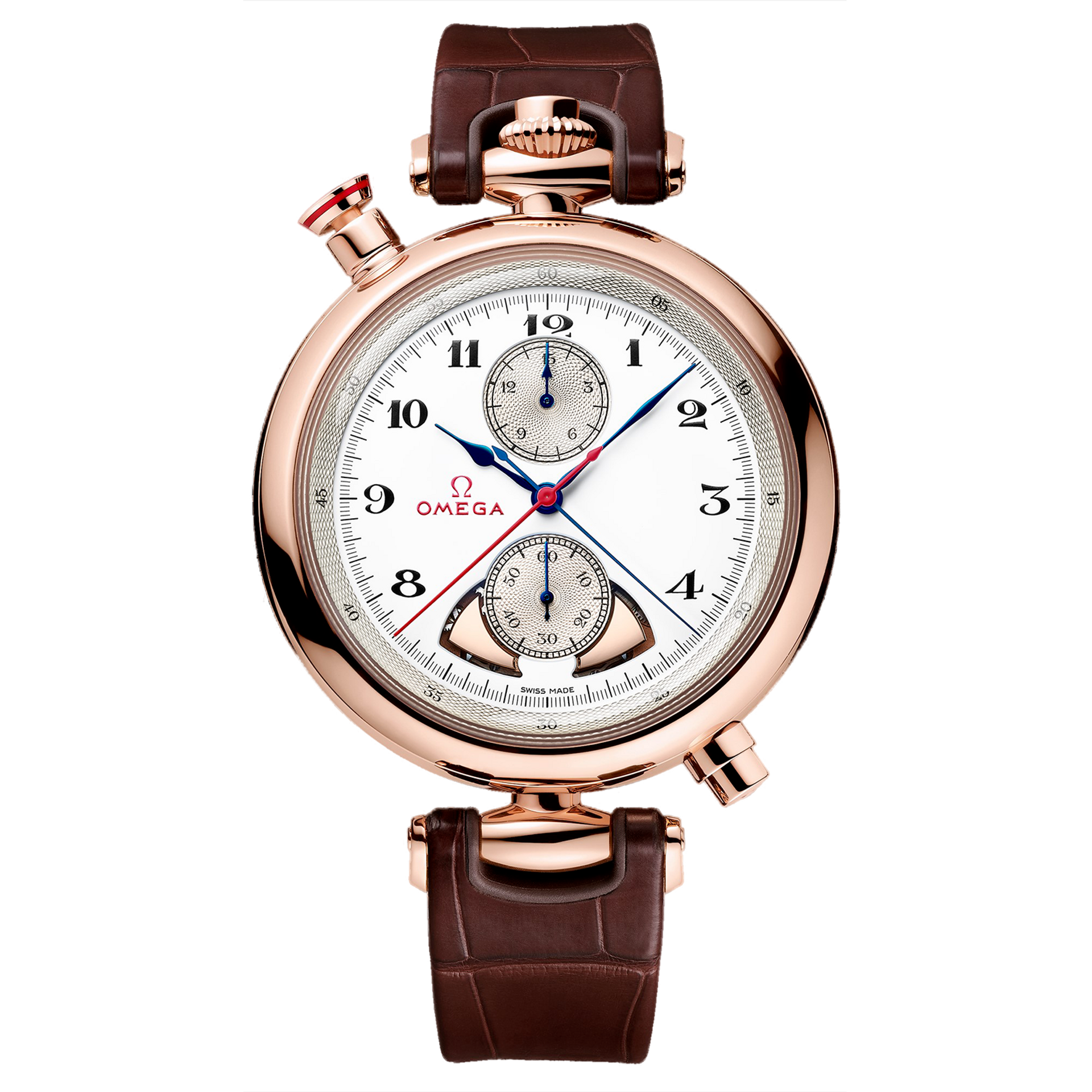
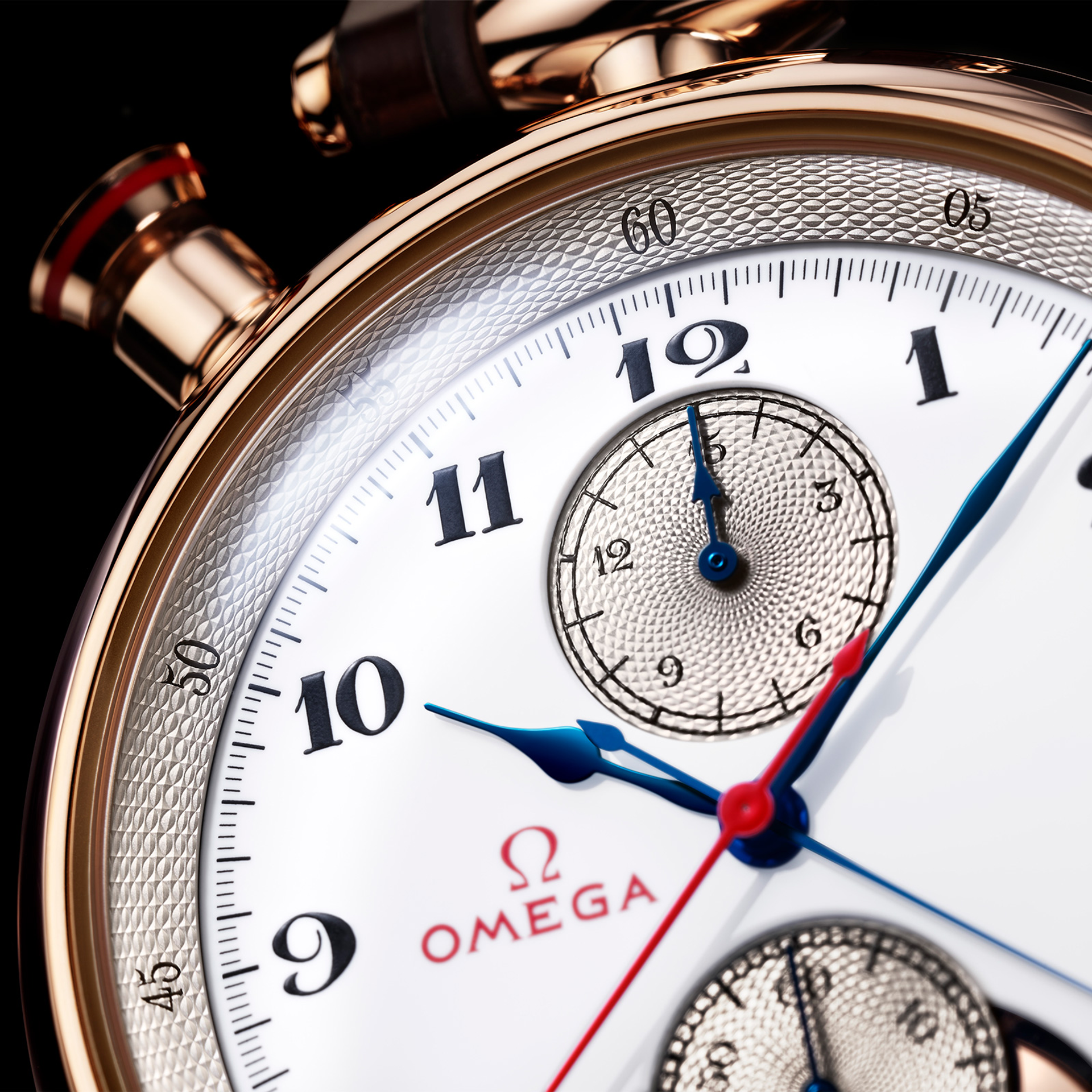
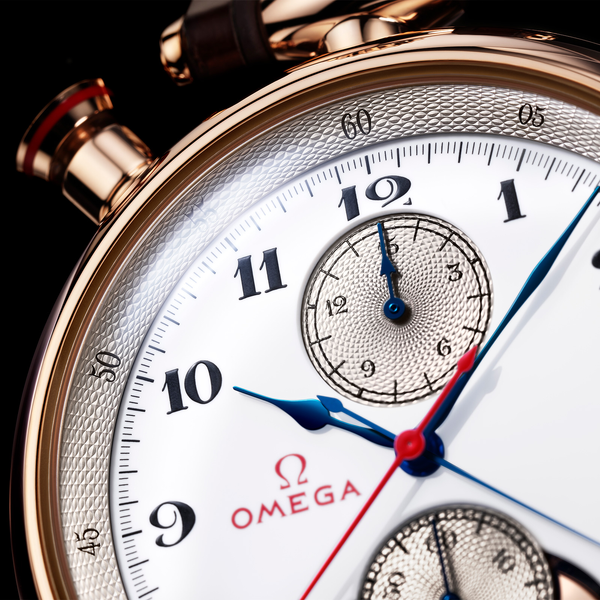
The Olympic 1932 Chrono Chime is the most complicated watch ever from Omega. Developed in collaboration with Blancpain, the movement took six years to complete. Its two complications are embedded in Omega’s history. They are a minute repeater – Omega was first to present a minute repeater in wristwatch form, in 1892 – and a split-seconds chronograph in reference to the pocket stopwatches that timed athletes at the 1932 Los Angeles Olympics when Omega made its debut as Official Timekeeper. What differentiates this remarkable watch from another striking watch is that it sounds not the passing hours and minutes but the elapsed time measured by the chronograph. Adding an additional layer of complexity, the movement in Sedna gold integrates a Co-Axial escapement whose 5Hz frequency enables 1/10th of a second precision, and meets the criteria for Master Chronometer certification which include resistance to magnetic fields of up to 15,000 gauss. The design is reminiscent of a pocket watch, with the crown at 12 o’clock. Visible hammers chime three sequences on two gongs for the minutes, ten seconds and seconds corresponding to the time measured by the central chronograph hand and the 15-minute counter at 12 o’clock. Omega has filed 17 patents for this watch.
Function
- Function Hours, Minutes, SmallSeconds
Complication
- Complication Split-SecondsChronograph, MonopusherChronograph, MinuteRepeater, SeePresentationText
Movement
- Movement name Co-Axial Master Chronometer Calibre 1932
- Energy source Manual
- Power reserve 60 Hours
- Shape round
- Number of jewels 45
- Diameter 32.5 mm
- Thickness 9.05 mm
Case
- Shape round
- Material 18k4NPinkGold
- Thickness 16.9 mm
- Diameter 45 mm
- Back Sapphire
- Water resistance 30 m
Dial
- Colour blancOpalin
Strap
- Material leather
- Colour brown
- Fastening pinBuckle