FHH | Le renouveau féminin de la montre mécanique

The mechanical watch for women. The mechanical watch for women. The mechanical watch for women. The mechanical watch for women. The mechanical watch for women

The mechanical watch for women. The mechanical watch for women. The mechanical watch for women. The mechanical watch for women

28 November 2025

The mechanical watch for women

education

by Christophe Roulet

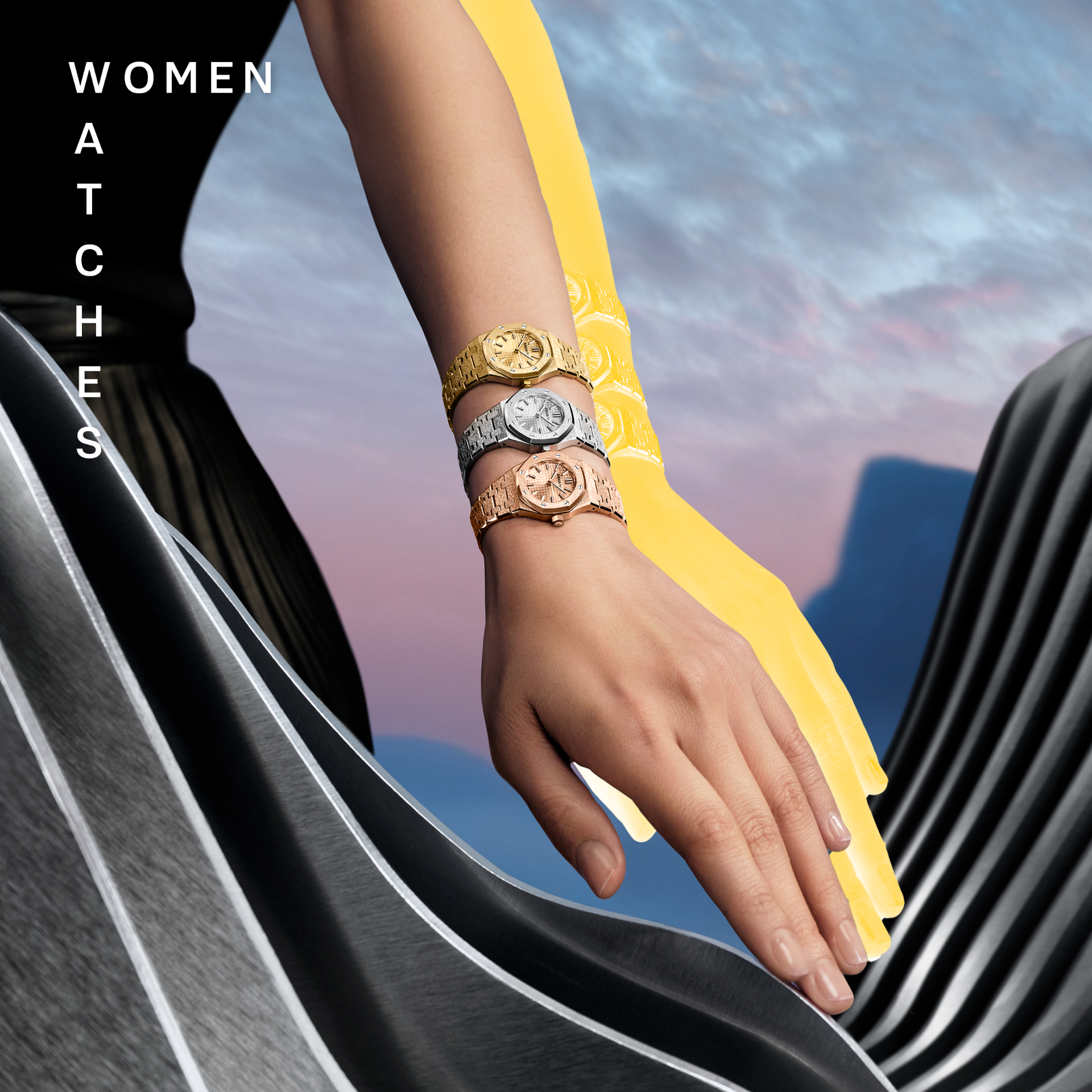
For a long time, women’s watches were limited to scaled-down versions of their masculine counterparts. Not any more. Now, virtually every brand proposes collections specifically for their female customers. Models that showcase crafts such as enamelling or gem-setting are joined by mechanical complications.

If the Grand Prix d’Horlogerie de Genève (GPHG), often described as the watchmaking equivalent of the Oscars, is a bellwether for evolutions within the profession, it’s worth casting an eye over its recent history. Despite certain brands’ categoric refusal to take part, the GPHG has grown into a landmark event, and more and more of the horological “elite” are filling the velvet seats of Théâtre du Léman each November. So what does the GPHG say about the industry’s view of women watch-buyers? In 2013 it signalled a change in mentalities with the introduction of two new categories: one for Ladies’ Complication Watch and another for Artistic Crafts Watch. This took the total number of awards to ten… a figure that would later double!

Not before 2013? It’s an innocent question that nonetheless reflects the existence of a “before” and “after” the 2010s. One might reasonably expect that brands would have jumped on the mechanical watch revival of the 2000s to – finally – offer women a choice beyond gem-set or miniature versions of men’s timepieces. It wasn’t to be. Diamonds were still a girl’s best friend and men were still the target audience, firstly to fill the empty space on their wrist and secondly for a gift they could give the woman in their life, ideally swathed in enough carats to show how much they cared.

Better late than never

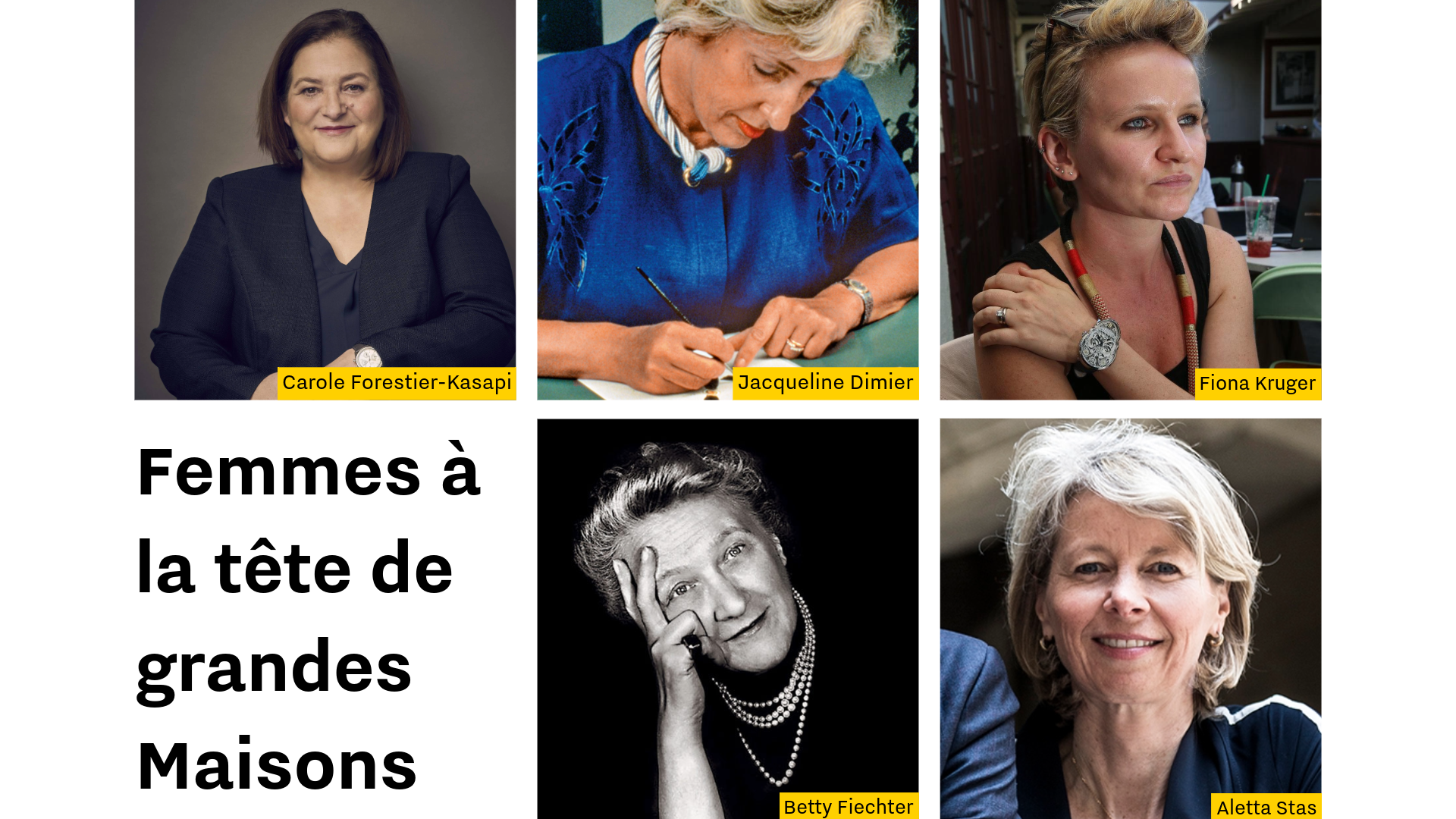
What a difference a decade makes. Brands woke up to women’s more assertive role in the horological sphere and recognised that female consumers would prefer a watch that matched their own criteria and preferences, not a men’s model in “precious” clothing. This awakening came about at the same time as a new generation of women were rising through the ranks and challenging the profession’s overly masculine codes. Today there are women at the head of storied houses, including Audemars Piguet, Chopard and Van Cleef & Arpels; there are female entrepreneurs, the likes of Fiona Kruger and Christelle Rosnoblet (Speake-Marin), and women like Carol Forestier-Kasapi at TAG Heuer or Cécile Guénat at Richard Mille in charge of products and design. They are taking up the mantle from pioneers such as Aletta Stas, co-founder of Frederique Constant in 1988; Jacqueline Dimier, head of product design at Audemars Piguet fifty years ago, and Betty Fiechter, co-owner of Blancpain from the 1930s. While still underrepresented in leadership roles, this female presence reflects a positive shift, mirrored by a product offering that is sufficiently diverse to satisfy every audience.

Femmes à la tête de grandes Maisons

Women at the helm of big Maisons

Put simply, there is no longer any shortage of models designed with the female consumer in mind. That some continue to sparkle with diamonds, emeralds, amethysts and other stones, in the grand tradition of the jewellery watch, by no means diminishes women’s interest in a product that has accompanied the human adventure for more than five centuries and proven irresistible to so many men. Some are fitted with quartz movements, making them more affordable, and who are we to criticise provided they live up to values of craftsmanship, precision and durability. Is there any need to specify that women now have as many different activities, ambitions, personalities and styles as men, and demand a breadth of choice which they had previously been denied, with high-mech and avant-garde models cohabiting with fantasy, delicate or métiers d'art pieces.

“An intelligent strategy”

Long before the 2010s, brands at the forefront of fashion and jewellery were already catering to women with memorable designs. The Serpenti and, more recently, Lucea at Bulgari; the Baignoire and the Panthère at Cartier; the Première and, more recently, the BoyFriend at Chanel; Cape Cod and Kelly at Hermès; Piaget’s Limelight Gala, inspired by its famous 1960s ornamental stone dials, among others, left watchmakers to look on from the sidelines. The polarisation that began in the 1990s, confirmed by the emergence of listed groups, highlighted the importance of profitability — and could there be any real doubt as to the relevance of a credible offering of women’s watches, given that female buyers potentially made up half the clientele?

“Recent years have seen a number of brands, in luxury, prêt-à-porter and consumer goods, support female empowerment, gender equality or women’s right to education,” says Eszter Faykiss, founder of Loupiosity. “Of course there are societal and sociological motivations for this but also purely commercial interests. The Generation Y population in the United States is estimated at 80 million. Within that demographic, women’s revenues have increased significantly compared with the previous two decades, to the extent they now earn 90% of what their male counterparts earn. In 1980 that figure struggled to reach 64%. This proves there is an important customer base with different motivations and objectives, who purchase goods for their quality, value and buzz.” Conclusion: targeting women with well-executed watches at realistic prices is an intelligent strategy.

Brand new

Watchmakers were quick to realise they would do well to extend their women’s offering… or get left behind. Their initial reaction was to adapt their icons for female wrists, as did Audemars Piguet with its Royal Oak, Breitling with its Navitimer, Hublot and the Big Bang, Omega with its Speedmaster and Panerai with the Luminor. Their second initiative, one that was riskier but stronger in terms of identity, was to develop collections from the ground up. Think Breguet and La Reine de Naples, F.P. Journe and Élégante, Jaeger-LeCoultre and Rendez-Vous, Patek Philippe and Twenty~4 or Vacheron Constantin and Égérie. Even the most “macho” brands diversified, for example MB&F and its Legacy Machine FlyingT, Richard Mille with the Bonbon, Talisman or RM 07-04 Sport, and TAG Heuer with its Carrera and Aquaracer. Not forgetting complication models made specifically for women (see Box 1). 

Charlyze Theron and her Breitling Navitimer 36

Charlyze Theron and her Breitling Navitimer 36

Alongside the métiers d’art models (see Box 2), could it be that brands have hit on the perfect formula with comfortable, reasonably affordable watches powered by mechanical movements, with none of the “frills” that can make them entirely unsuited to daily wear and add zeros to the price tag — as one female watch professional laments? If our expectations of a watch are a technically advanced movement, an original and well-executed design, perfect legibility and wearer comfort, within a range of models and prices that make it hard to choose, clearly women’s timepieces meet the brief. Granted, there is still some way to go before the range of women’s watches rivals that for men, but is that a realistic or even desirable objective? As gender boundaries become increasingly fluid, the question is surely that everyone should find the watch that fulfils their wishes.

SPOTLIGHT 1 SPOTLIGHT 1 SPOTLIGHT 1 SPOTLIGHT 1 SPOTLIGHT 1 SPOTLIGHT 1

Poetry in motion 

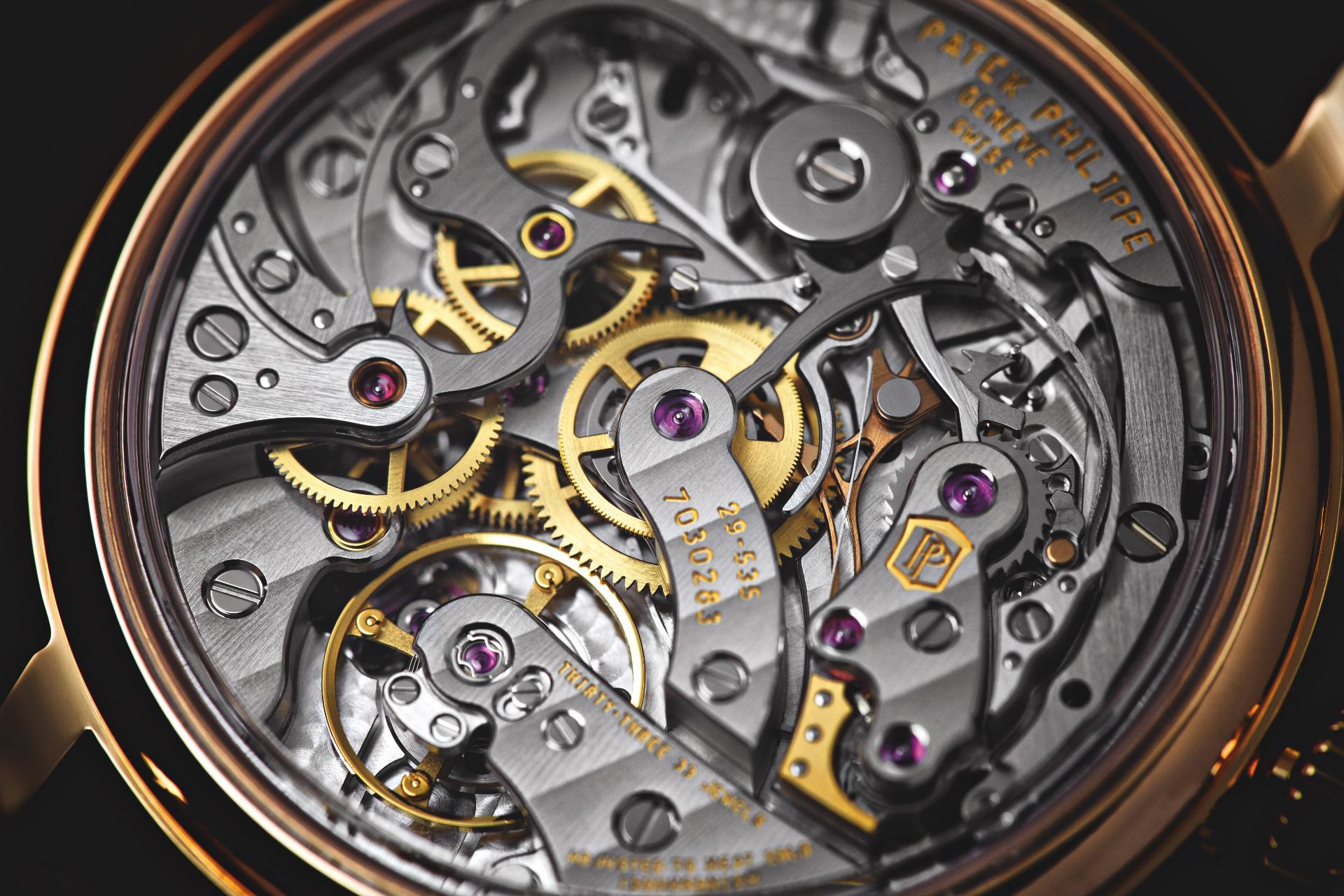
Traditionally, mechanical watchmaking’s “Big Three” are Audemars Piguet, Patek Philippe and Vacheron Constantin. Yet as astonishing as it may seem, the second in the list waited until 2009 to release its first in-house chronograph movement, Calibre CH 29-535 PS. Five years in development, it replaced the CH 27-70 on a Lémania base. Even more astonishing, perhaps, is that Patek Philippe gave first dibs on this new calibre to women, inside the cushion-shaped Ladies First Chronograph Ref. 7071 (replaced in 2018 by Ref. 7150/250R-001, a round model equipped with the same movement). It was official: complication watches were of interest to women, too.

One need look no further than the (sometimes wildly) imaginative creations on offer. Van Cleef & Arpels is a master of the art with its Poetic Complications®, where lovers cross a bridge to exchange a kiss at midday and midnight, fairies beat their retrograde wings or flowers open and close to indicate the time. At Fabergé, a peacock fans its tail to reveal the time while on Cartier’s Panthères et Colibri watch, a humming-bird’s flight measures power reserve while a panther cub jumps out from between its mother’s paws. Hermès, meanwhile, delights in playing with perceptions of time, with its Dressage L’Heure Masquée, Slim L’Heure Impatiente or Arceau Le Temps Suspendu.

Patek Philippe Ladies Chronograph Ref 7150

Patek Philippe Ladies Chronograph Ref 7150

Moonlight serenade

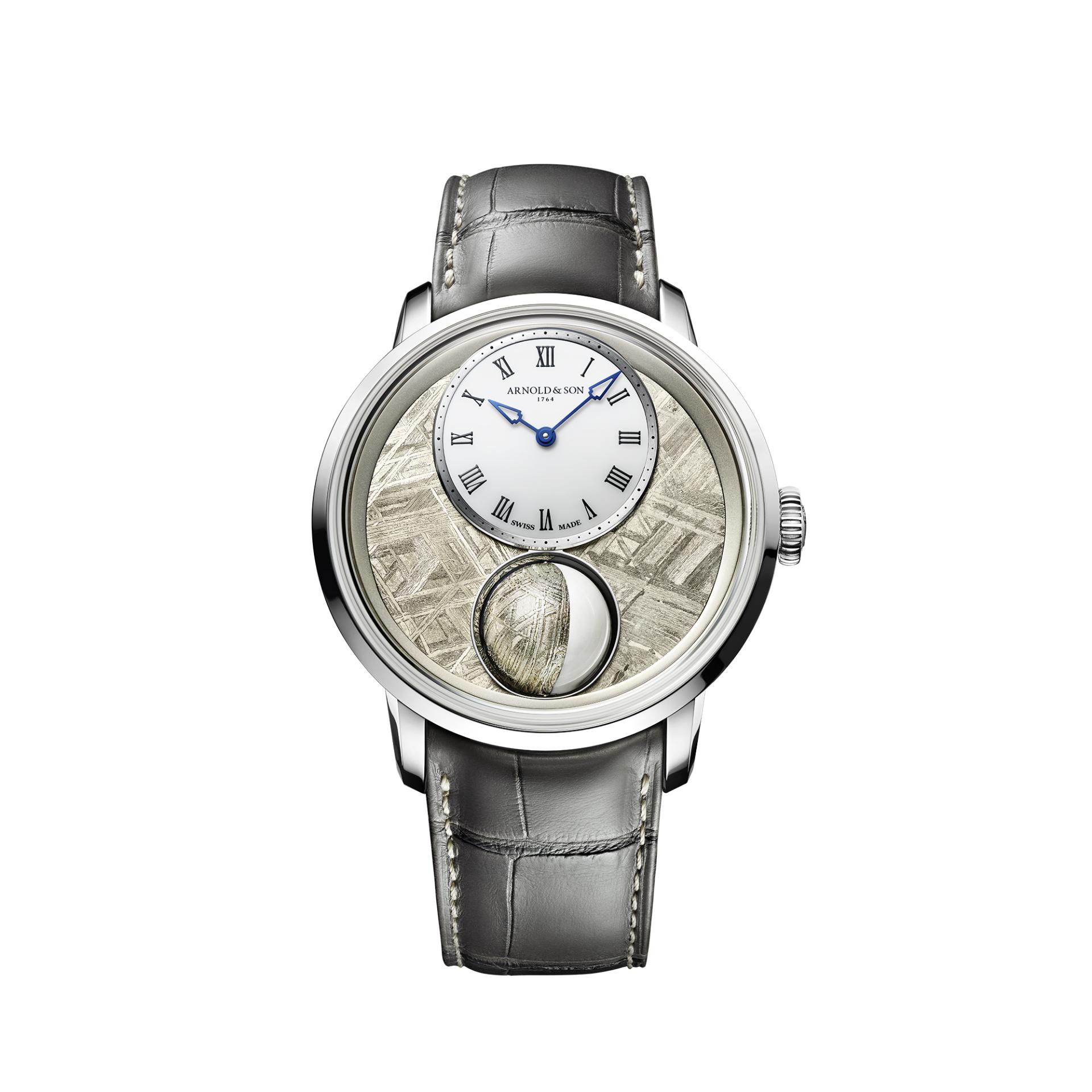
These watches, whose mechanisms are partly indebted to the esteemed movement-manufacturer Agenhor, in Geneva, are just one facet of complications au féminin. When it comes to astronomical displays, moon phases take centre-stage for the sheer poetry of seeing the path of Earth’s satellite reproduced on the wrist. There are almost as many moon-phase watches as there are stars in the sky – every brand has one in its catalogue. Some of the most noteworthy are the highly figurative interpretations by Sarpaneva with its characterful case; Arnold & Son’s Perpetual Moon and its Luna Magna with a three-dimensional moon, a trait shared with De Bethune. Not forgetting the more recent Les Matinaux L’Heure Exquise from Trilobe whose moon, represented for both hemispheres, is coaxial to the seconds display. A first.

From moon phases to chronographs, perpetual calendars, minute repeaters, world timers or tourbillons, the roll call of complications is more than complete. Those brands that skilfully navigate these tumultuous waters, the likes of Audemars Piguet, Breguet, Jaeger-LeCoultre or Vacheron Constantin, to name just four, have the means to keep the most demanding woman watch-wearer happy. One specificity is, nonetheless, disappearing, having reached the height of its fame in the latter half of the twentieth century. While watchmakers continue to puzzle over ways to shave fractions of a millimetre from the height of their movements, ultra-miniaturised calibres, the likes of Vacheron Constantin’s “tuyau” (1916 – 26 x 6.4mm), Jaeger-LeCoultre’s Calibre 101 (1929 – 14 x 4.8mm) or Blancpain’s R550 (1956 – 11.85mm in diameter), have few contemporary equivalents. Rare exceptions, the LTM 1000, made by Le Temps Manufacture in Fleurier, takes up just 21mm by 9mm, while in 2022 Bulgari unveiled the BVL 100 Piccolissimo, a diminutive 12mm across. Signs of the imminent return of the mini mechanical watch?

Arnold and Son Luna Magna Platinum meteorite - 2022

Arnold and Son Luna Magna Platinum meteorite - 2022

SPOTLIGHT 2 SPOTLIGHT 2 SPOTLIGHT 2 SPOTLIGHT 2 SPOTLIGHT 2 SPOTLIGHT 2

The métiers d’art return

The métiers d’art or artistic crafts are ingrained in the history of horology. Since the dawn of civilisations, this fusion of mind and hand has served to create magnificent ornamentations, quickly becoming the essential companion to watchmakers’ mechanical science and creations destined for the “greats” of this world. Primarily centred on the techniques of enamelling, gem-setting, engraving and guilloché, these crafts prospered until wristwatches took the place of the richly decorated pocket watches of the elite. Consequently, the twentieth century saw a long hiatus for the decorative arts in watchmaking. Virtually inexistant, some were threatened with extinction. Women’s watches reversed the trend. While these techniques are by no means limited to a feminine repertoire, for reasons of culture and sensibility, women are undoubtedly particularly receptive to this category of watch.

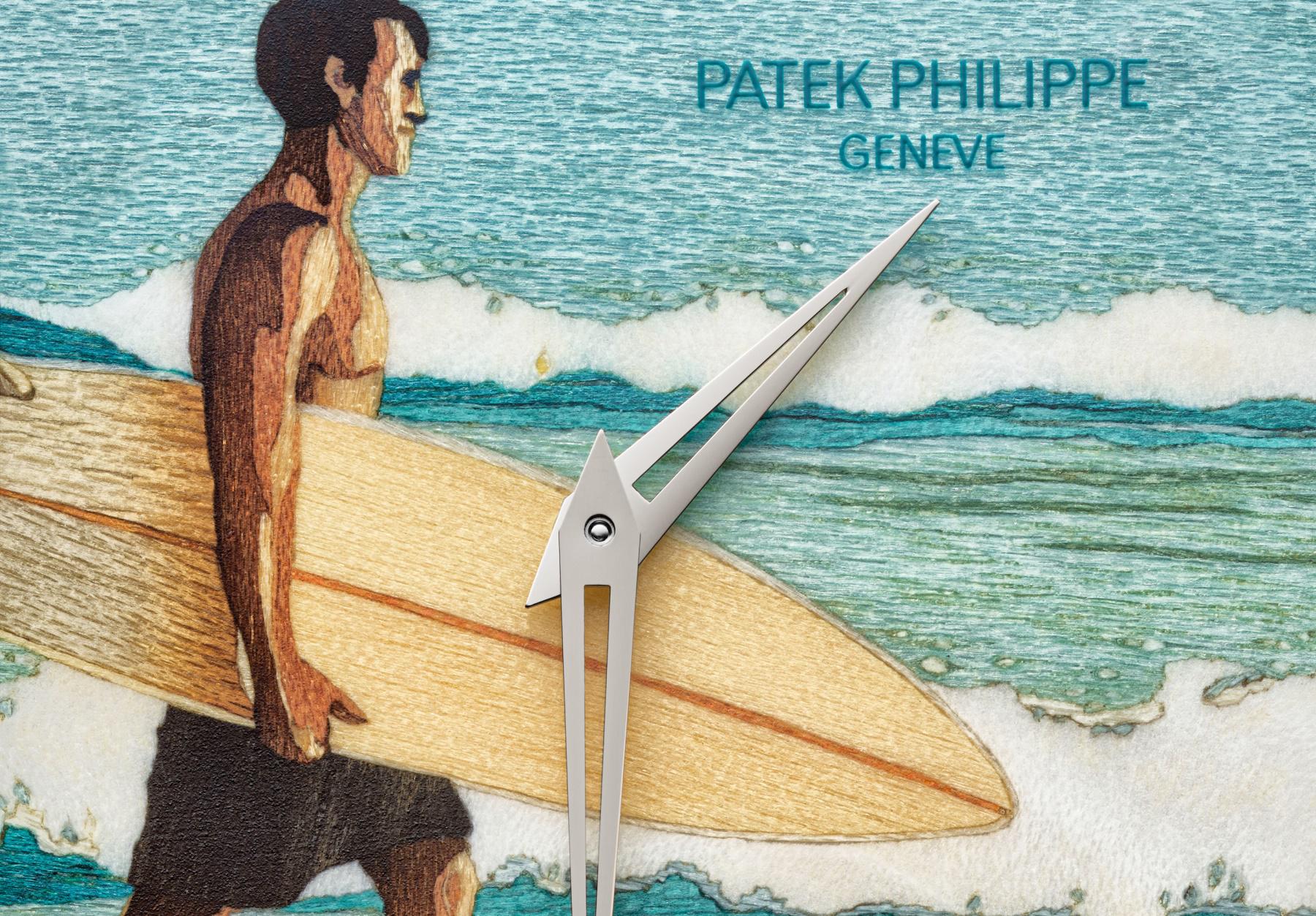
Patek Philippe Rare Handcrafts 2024

Patek Philippe Rare Handcrafts 2024

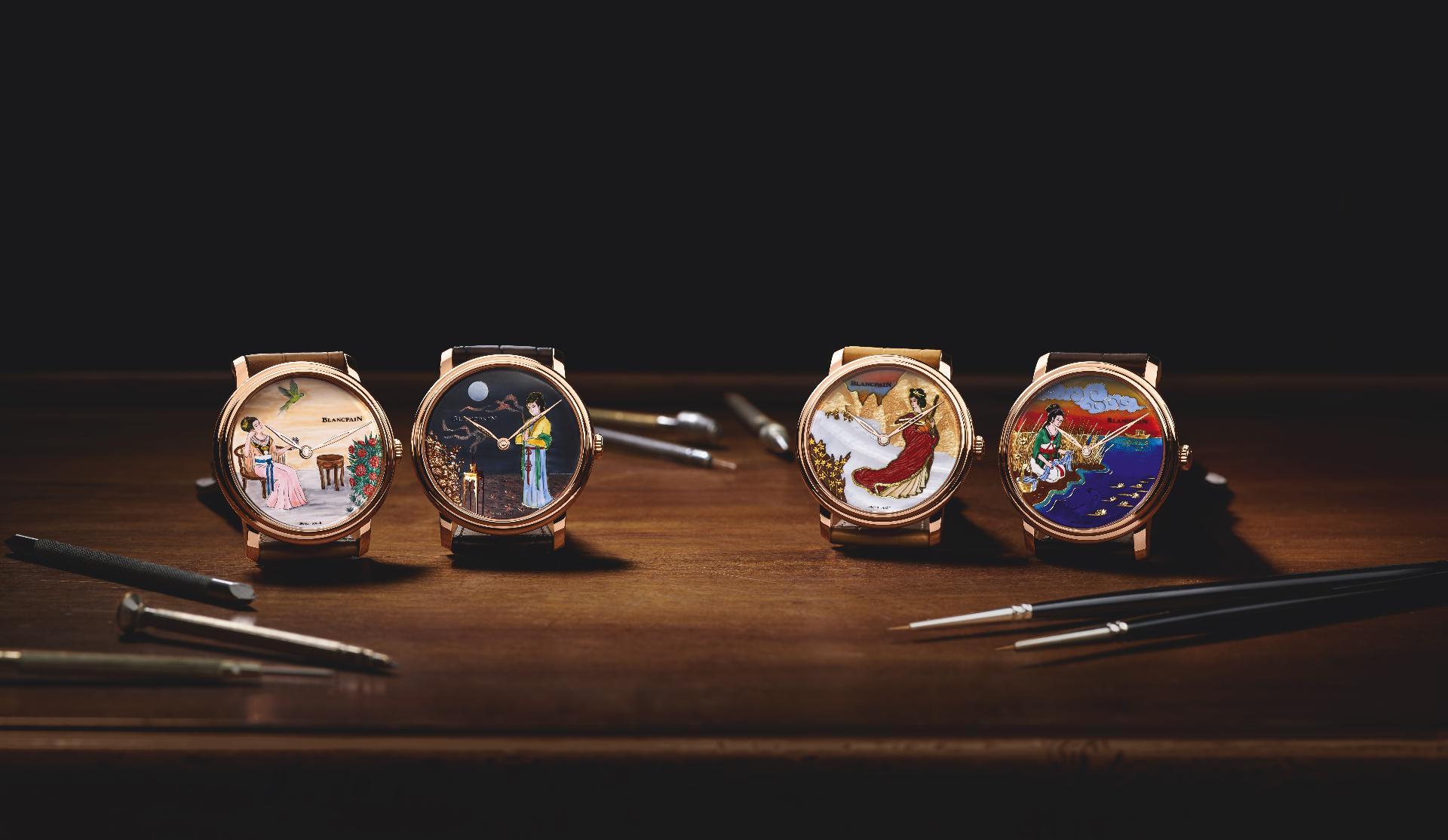
Over the past two decades, these crafts have enjoyed a slow but undeniable return to favour at brands such as Blancpain, Cartier, Chanel, Hermès, Patek Philippe and Vacheron Constantin, fervent defenders of these techniques. This renaissance has paved the way for forgotten techniques or borrowed from other disciplines. The “traditional” métiers d’art are now joined by mosaic, plumasserie, filigree, granulation, lacquer, miniature painting, millefiori, and more. As cases and dials increasingly resemble works of art, their creators are celebrated as never before — many of them women who are held up as examples in their field, such as enamellist Anita Porchet or engraver Michèle Rothen.

Blancpain Great Beauties

Blancpain Great Beauties