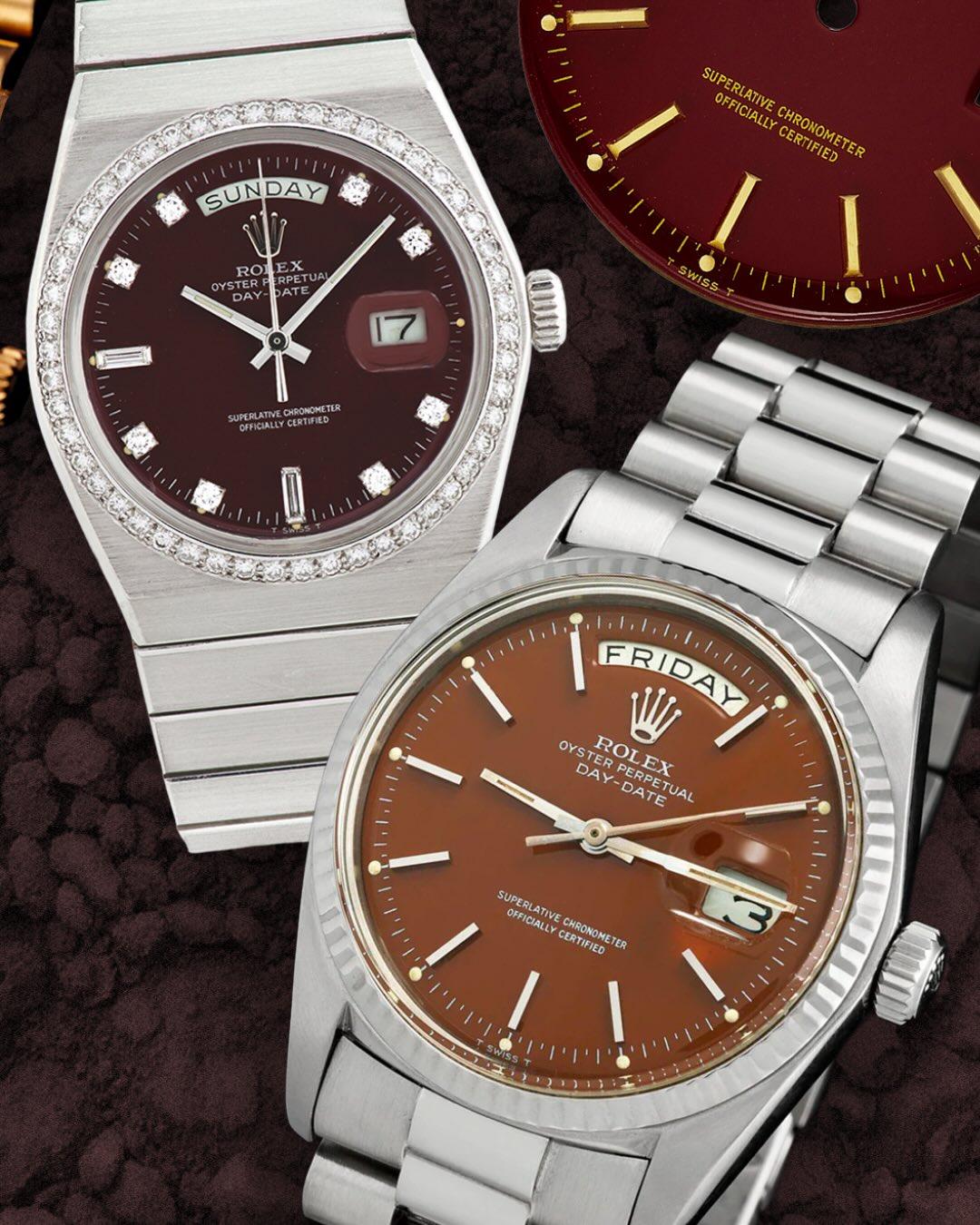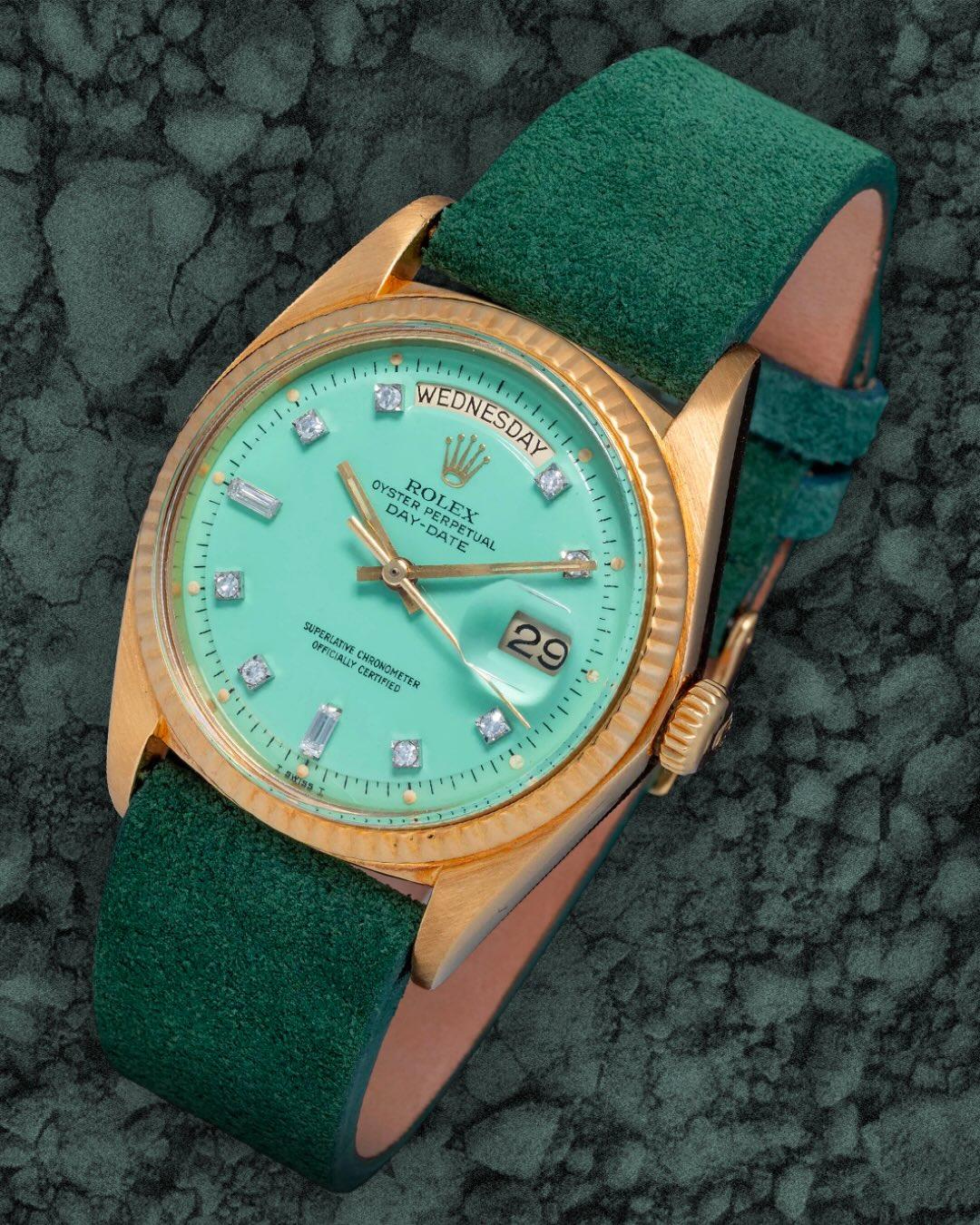
Quirky Backstory. Quirky Backstory. Quirky Backstory. Quirky Backstory. Quirky Backstory
Rolex’s Stella Dials. Rolex’s Stella Dials. Rolex’s Stella Dials. Rolex’s Stella Dials
13 February 2026
The Quirky Backstory Of Rolex’s Stella Dials
Rolex isn’t exactly famous for bold colours. Which is precisely why these dials feel so fascinating today.
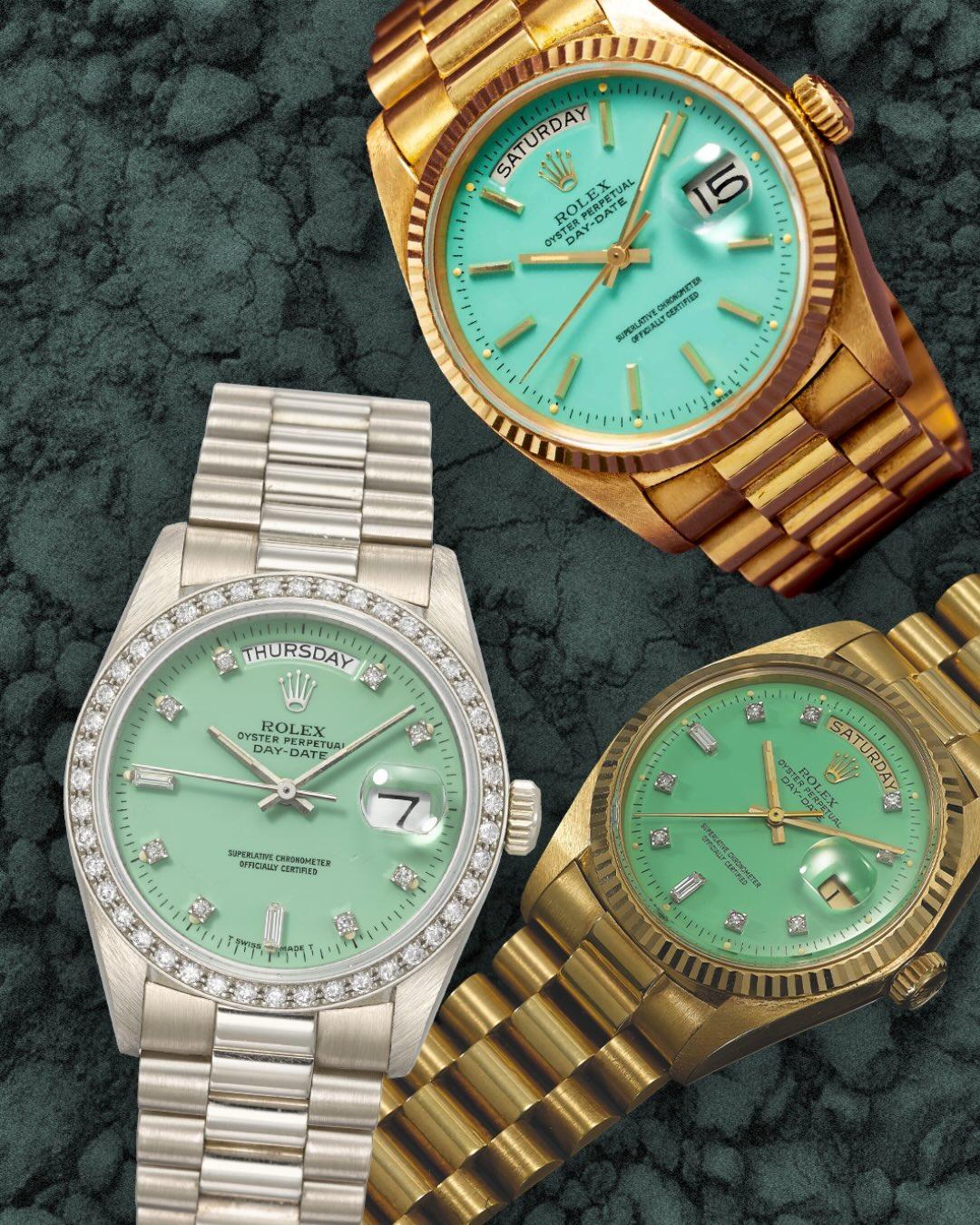
In the late 1970s and throughout the 1980s, a handful of Day-Date watches left Geneva wearing glossy shades that looked more like pop design than “classic Rolex”: coral pink, cherry red, turquoise, emerald green, canary yellow.
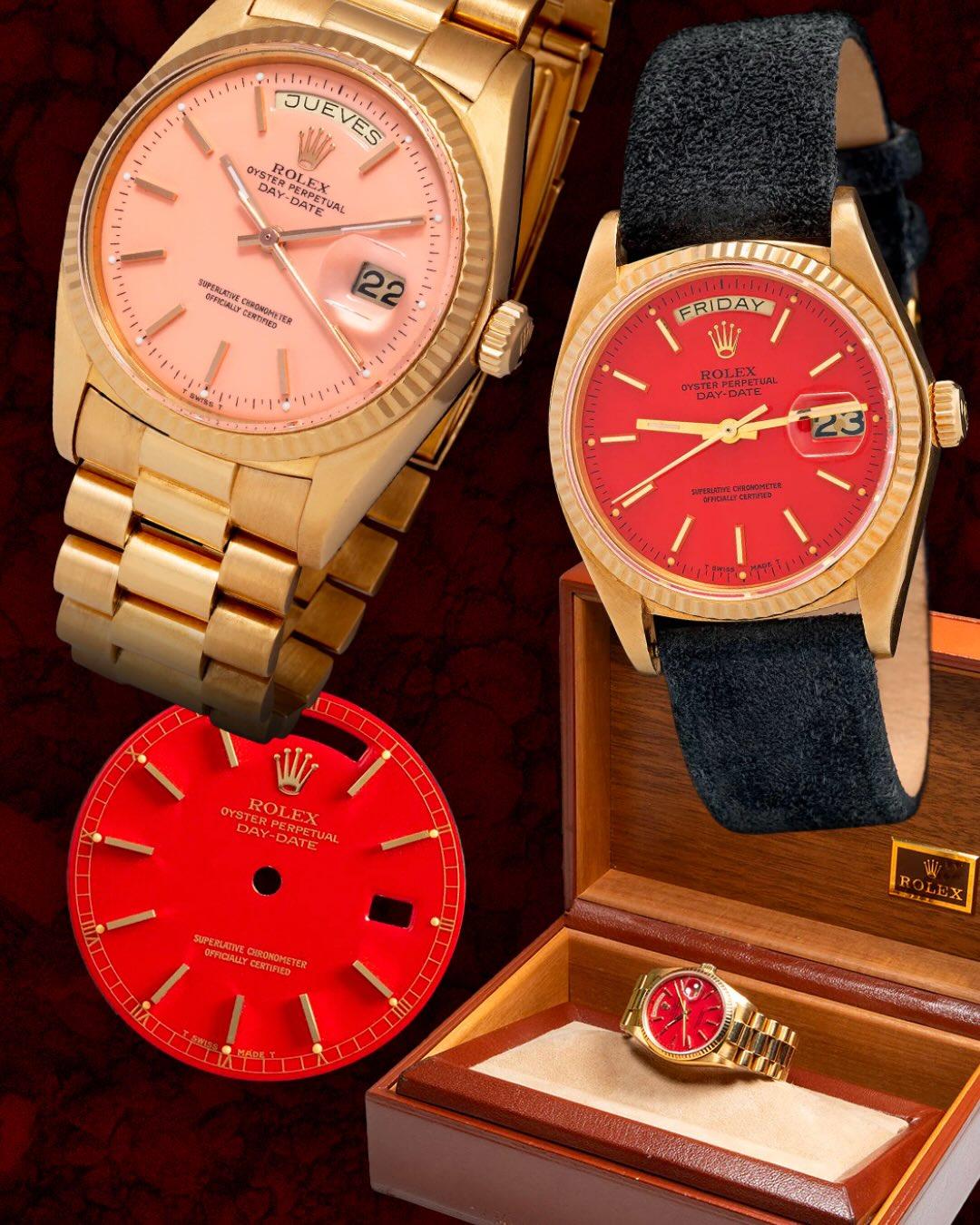
Bright, opaque, unapologetic. Here’s the key detail: “Stella dial” wasn’t an official Rolex collection name at first.
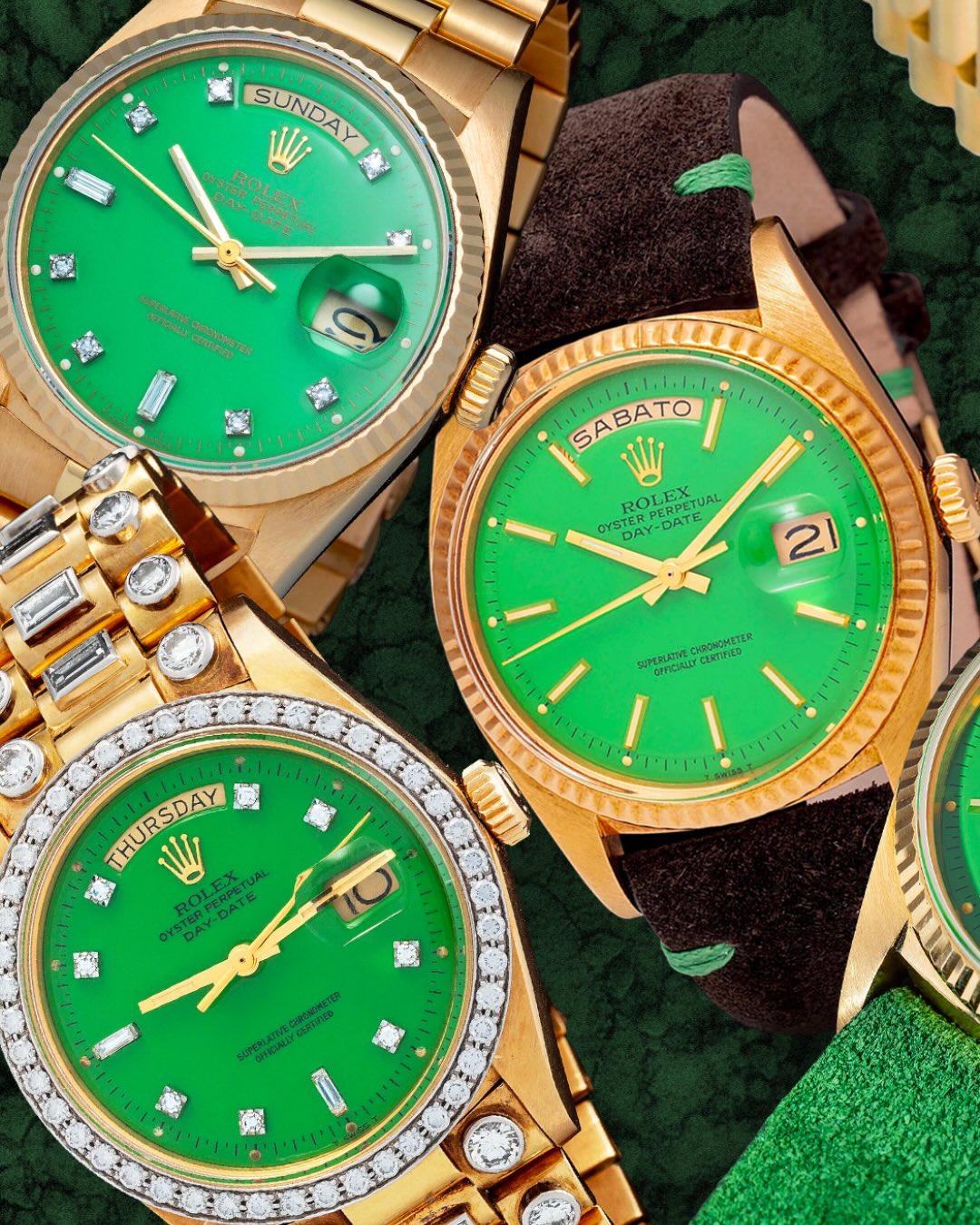
It became the nickname used by collectors, and it most likely comes from Stella S.A., a Swiss company based in Geneva (Châtelaine) that supplied the special lacquer and pigments used for these vibrant dials.
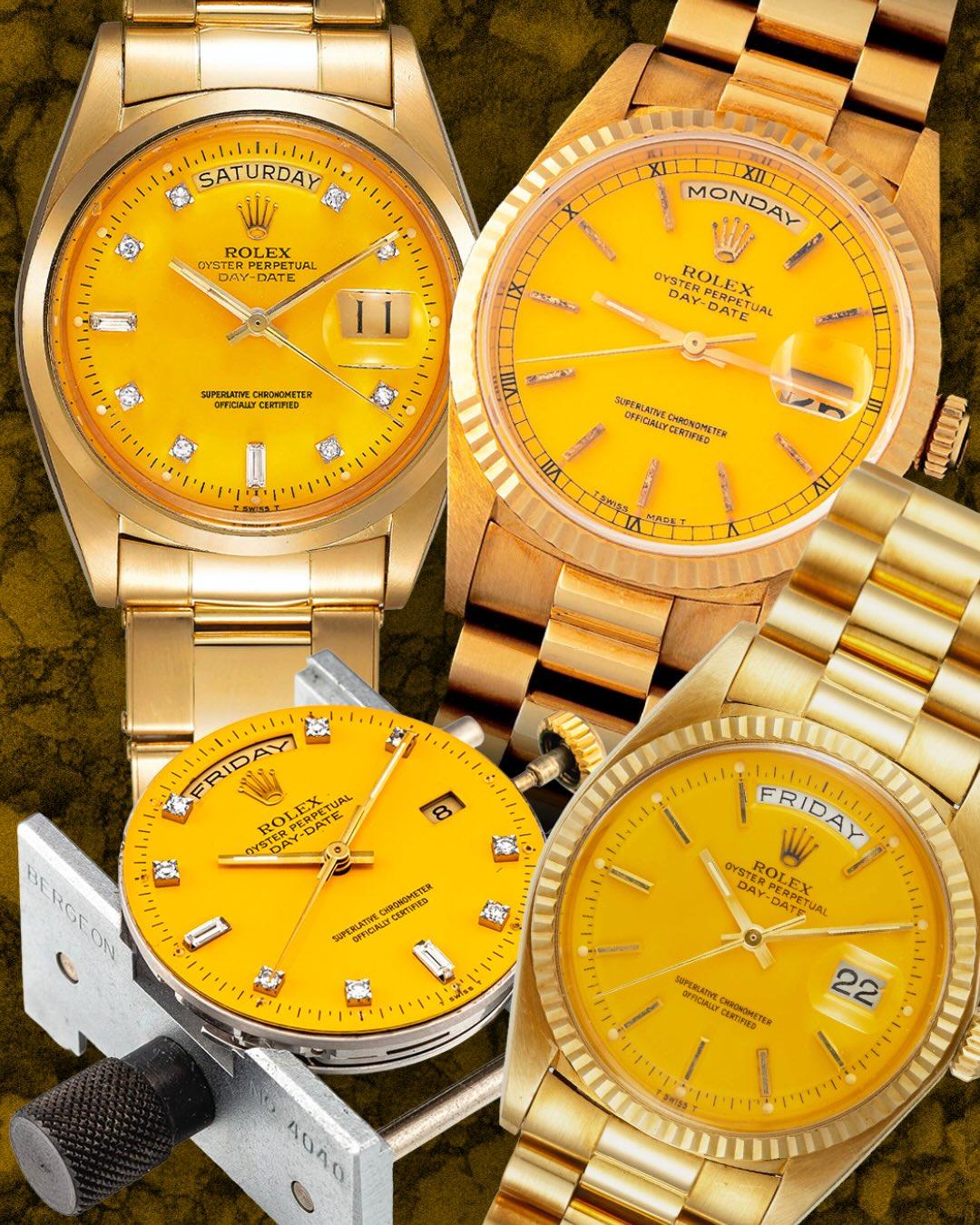
The making of a Stella dial is all about surface chemistry and patience.
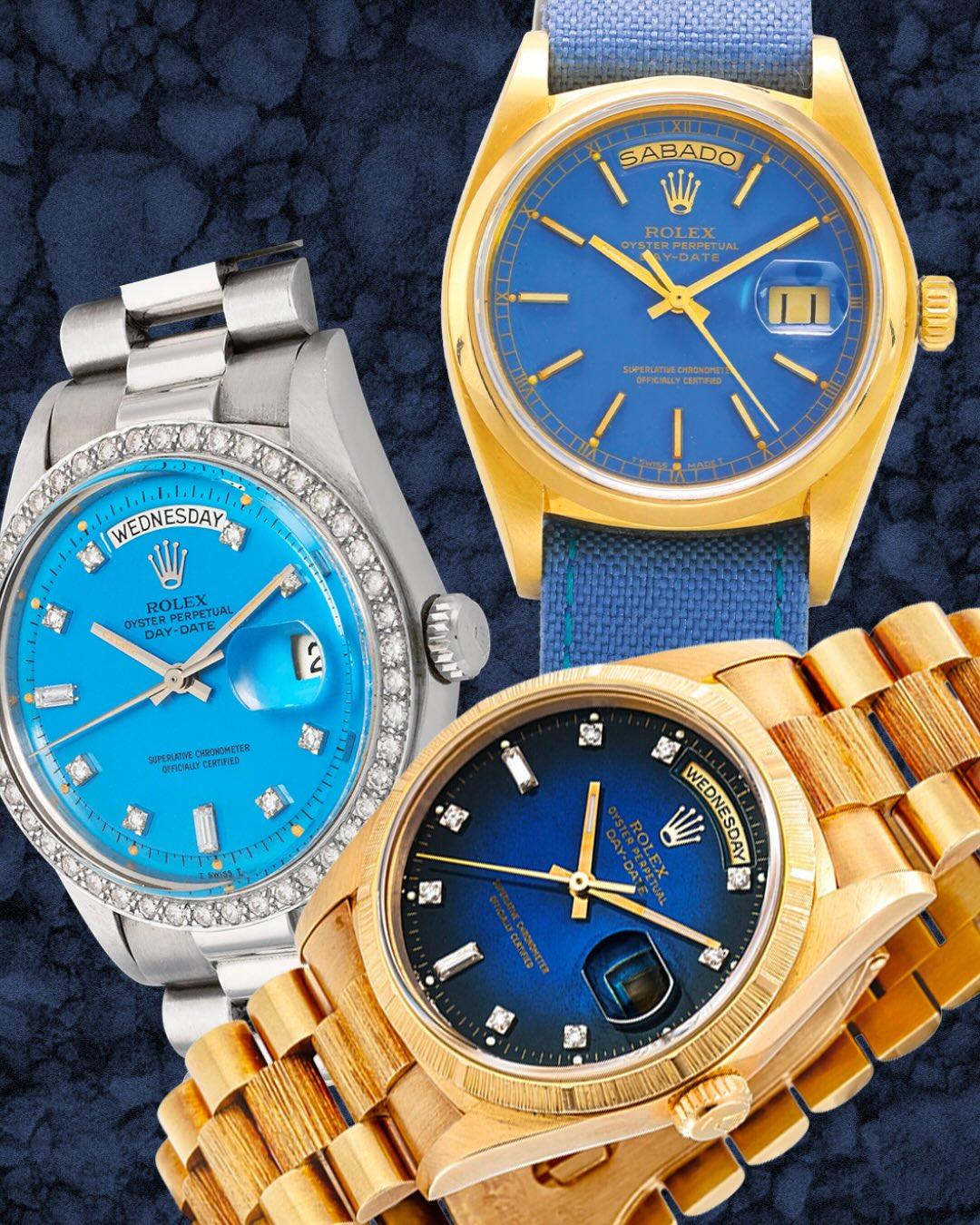
A metal base is prepared and smoothed, then coated with multiple layers of coloured lacquer, each one needing time to settle and cure.
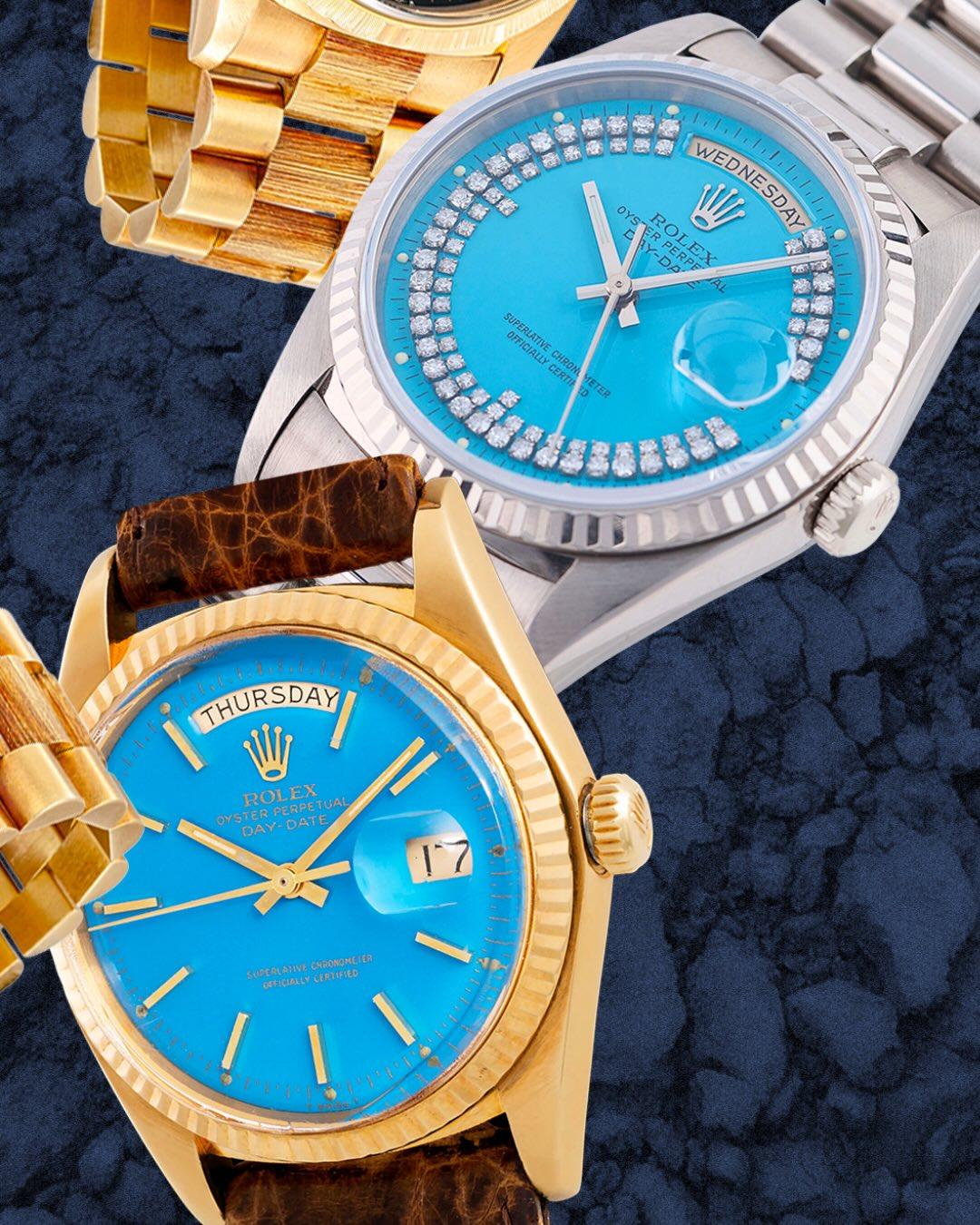
The final step is the magic trick: polishing and finishing until the dial reaches that signature high-gloss “wet look”, where the colour seems to sit in depth rather than on the surface.
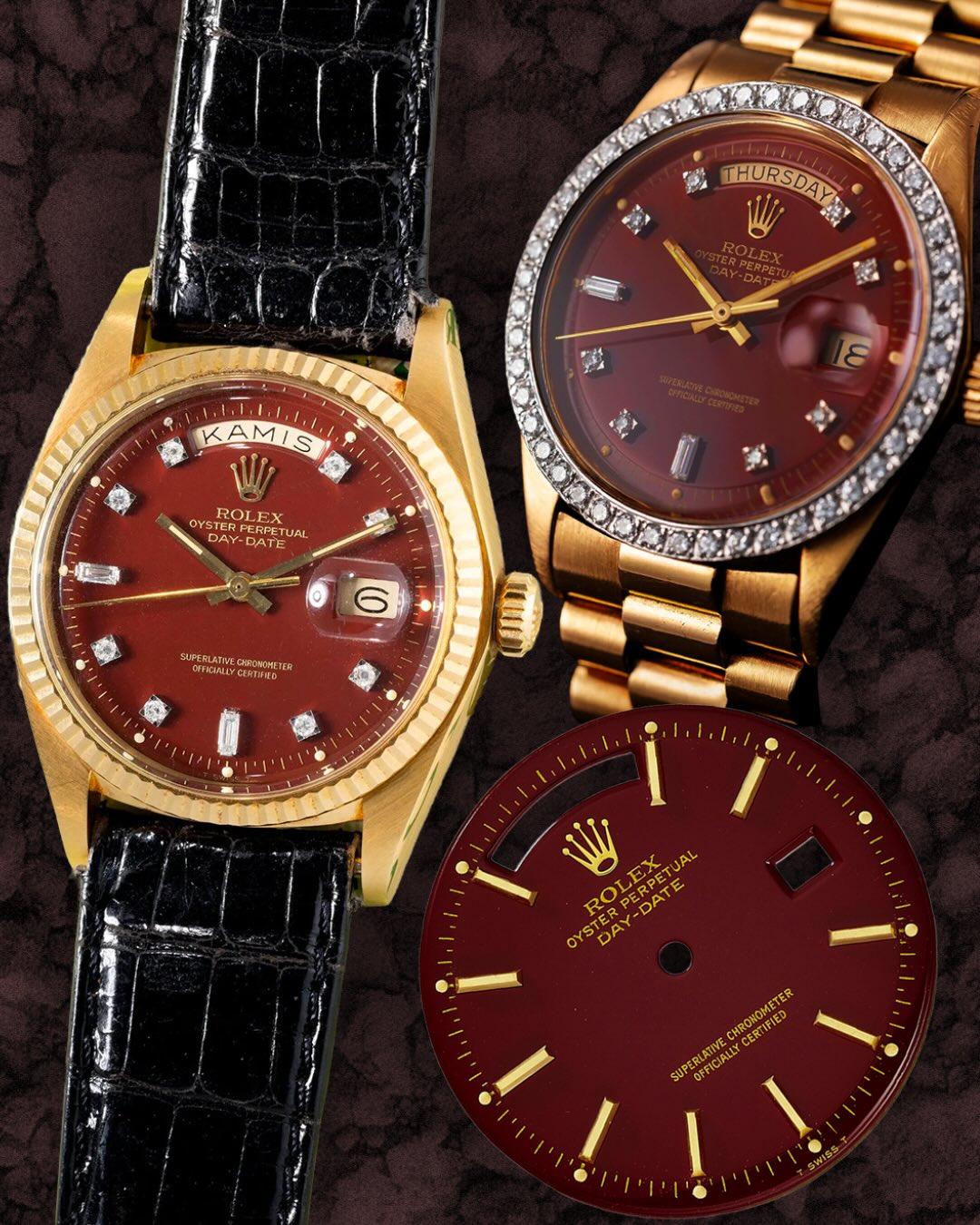
And like all lacquered objects, they are also beautifully sensitive to time. Exposure, ageing, and storage conditions can change the tone, create tiny cracks, or produce subtle “spidering”.