Without women, the Swiss watch industry would probably never have soared to its current heights, yet for centuries the watch world remained a male-only territory. Timepieces, so it was believed, were a man’s business, crafted by masculine hands for a masculine wrist. In a world that showed little consideration for the women at its workbenches, a woman’s watch was deemed little more than a decorative item that gave the time. While historical fact and industry statistics doubtless demonstrate a different reality, there is an element of truth in the suggestion that for a long time (too long), women have been the watch world’s second-class citizens. It took time, tenacity, temerity even, for women to leave the factories where brands employed them for repetitive, even dangerous tasks. But where does that leave us today?
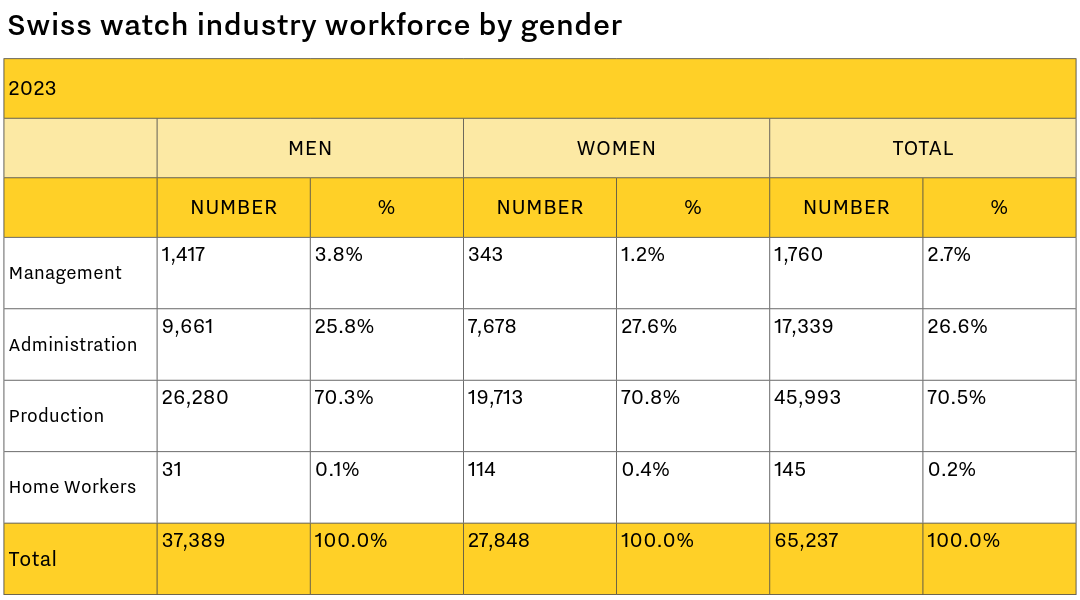
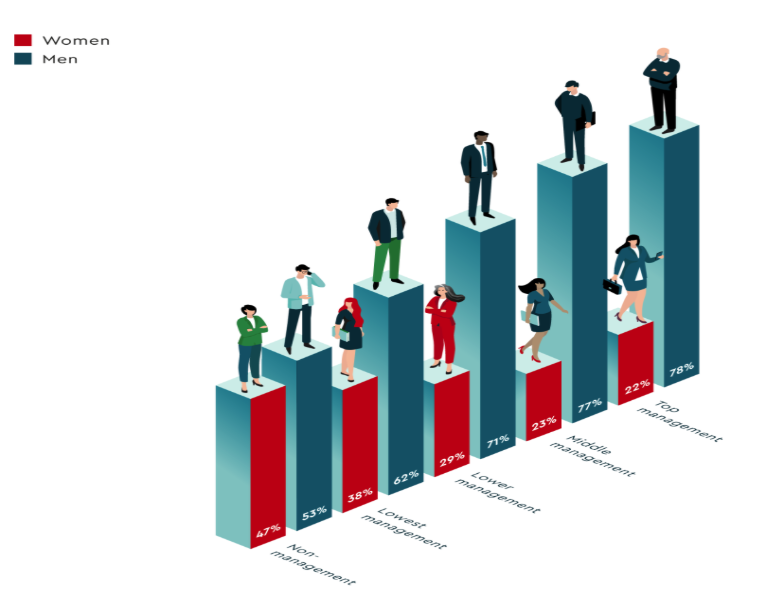
The census conducted by the Convention Patronale de l’Industrie Horlogère Suisse (CPI), the umbrella organisation for employers in the Swiss watch industry, shows that the country’s third largest export industry is also one of its major employers. Over the six years to end 2023, its workforce grew by 19% to 65,200 people and this figure remained stable (+0.6%) in 2024, despite a depressed economic climate. Women occupy 42.7% of Swiss watch industry jobs overall, 42.9% when considering production alone and 44.3% of administrative positions. This almost equal split between men and women should be enough to silence criticism… or not, given the under-representation of women (19.5%) at executive level. When it comes to corporate governance, women are outnumbered 4 to 1.